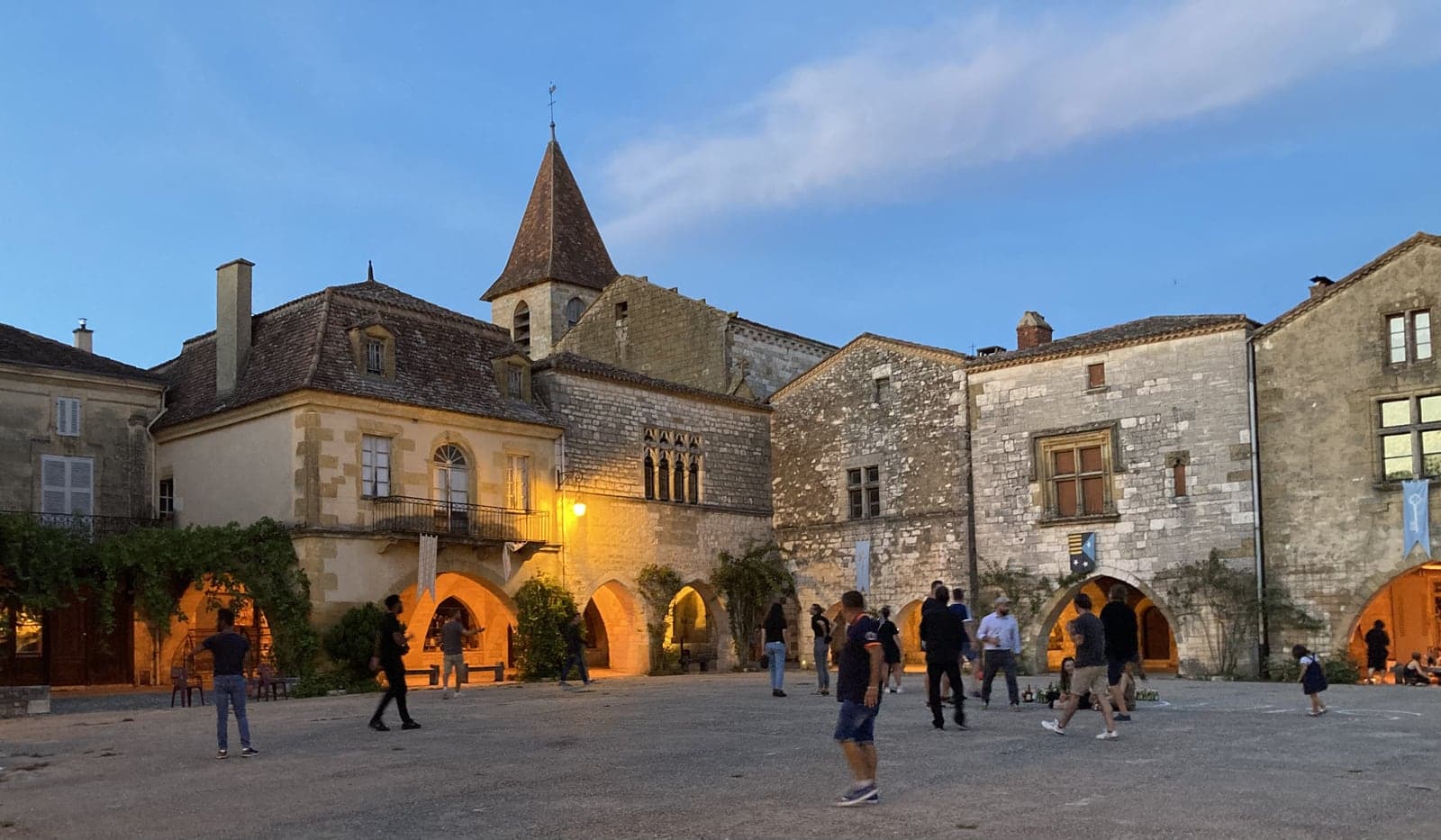
Timeless villages, prehistoric caves, world-class cuisine, and a pace that quietly insists you slow down — if you are planning your first visit to the Dordogne, this guide covers everything from getting there to choosing the perfect base, with a sample week-long itinerary included.
There is a particular kind of traveller who visits the Dordogne once and starts rearranging their life around coming back. The river valleys, the limestone villages glowing gold in the late afternoon light, the smell of a market on a Wednesday morning in Sarlat — it gets under your skin quickly. If this is your first time, you are in for something genuinely special. This guide will help you plan it well.
When to Go
The Dordogne rewards visitors in every season, but each offers a genuinely different experience. Getting the timing right can shape your whole holiday.
Spring (April–June) is many people's favourite window. Temperatures sit comfortably between 16°C and 22°C, wildflowers carpet the meadows, and the famous markets are in full swing without the summer queues. Walking, cycling, and castle-hopping are all effortless. Many of our guests who visit in May say it feels like the region is entirely theirs.
Summer (July–August) is vibrant and social. Villages host night markets, the Dordogne river fills with canoes, and every terrace hums with conversation. A villa with pool Dordogne becomes not just a luxury but a genuine retreat — a private pool means you can cool off on your own schedule rather than fighting for a patch of riverbank. Book restaurants and cave visits well in advance; Lascaux IV, for instance, sells out days ahead in peak season.
Autumn (September–October) brings golden light, quieter roads, and the beginning of truffle season. Walnut harvests, wine festivals, and the particular satisfaction of a long lunch on a still-warm terrace with almost no one around — this is the Dordogne at its most honestly beautiful.
Winter (November–March) suits slow travellers. Truffle markets peak in January and February around Périgueux and Sarlat, open fires are lit in farmhouse dining rooms, and the landscape has a stillness that is profoundly restorative. A handful of our villas are available in winter for exactly this kind of escape.
Choosing Your Base: Why a Private Villa Changes Everything
This deserves more than a bullet point, because your choice of base shapes the entire texture of your holiday. The Dordogne is a large département — roughly 80 kilometres from north to south — and simply picking a village to stay in does not tell the whole story.
Staying in a private countryside villa rather than a hotel or village gîte means you are not passing through the landscape — you are settled inside it. You wake to birdsong rather than other guests' breakfast trays. Your evening is a glass of wine on your own terrace, watching the light change over walnut orchards or river meadows. Many of our guests find that this sense of rootedness is what transforms a good holiday into an unforgettable one.
The advantage of a full kitchen is also not to be underestimated. You can shop at the local market on Wednesday morning in Sarlat — 20 minutes from many of our properties — bring home duck rillettes, a wedge of walnut tart, and a bottle of Bergerac rosé, and have a long, unhurried lunch that costs a fraction of a restaurant and tastes twice as good.
As for which area to base yourself in, here is an honest steer:
- The Périgord Noir (around Sarlat, Beynac, and the Vézère Valley): the classic heartland. Best for a first visit — highest concentration of must-see villages, châteaux, and prehistoric sites within a short drive.
- Périgord Pourpre (Bergerac and surrounds): gentler, more open landscape, excellent for wine lovers and families who want space without the summer crowds.
- Périgord Blanc (around Périgueux): quieter, less visited, and surprisingly rewarding — wonderful for those who want to feel genuinely off the beaten path.
- Périgord Vert (the green north): rolling hills, oak forests, and almost no tourist infrastructure. For experienced travellers who know what they are getting into.
For a first family holiday Dordogne, or any first visit, the Périgord Noir is the right answer. Start there. You can explore the others on your return visits — and there will be return visits.
Getting There and Around
The Dordogne is more accessible than many first-timers expect. Three airports serve the region well:
- Bergerac Airport (EGC) is the closest and most convenient option. Ryanair operates direct flights from London Stansted, London Luton, Bristol, Amsterdam, and several other European cities. The flight takes around 1 hour 20 minutes from London. The airport is small, relaxed, and 45 minutes from Sarlat by car.
- Bordeaux-Mérignac (BOD) is served by all major airlines including British Airways, easyJet, and Air France. It sits roughly 1 hour 15 minutes from the heart of the Dordogne by car, and is a good option if you want more flight flexibility or plan to spend a night in Bordeaux on arrival.
- Brive-la-Gaillarde (BVE) is a smaller regional airport with seasonal connections. It places you centrally within the Périgord Noir — a useful option if you can find the right routing.
Do you need a car? Unequivocally, yes. There is no meaningful public transport in rural Dordogne. A car is not optional — it is the holiday. The good news is that driving here is a genuine pleasure: quiet lanes through walnut groves, roads that follow the curves of the river, almost no aggressive drivers. Pick up your rental at the airport and allow yourself to get gently lost on the way to your villa. Rural French roads are narrower than British A-roads in places, but the pace is slow and locals are patient. A smaller car (a Peugeot 208 or Renault Clio class) handles the country lanes more comfortably than an SUV.
Top Must-Do Experiences
- Sarlat-la-Canéda market: Wednesday and Saturday mornings. Arrive by 9am for the best of the produce stalls. The town itself — one of the finest preserved medieval centres in France — deserves two hours on foot before lunch.
- Lascaux IV: The extraordinary full-scale replica of the original cave near Montignac, about 25 minutes north of Sarlat. Allow two hours minimum; book online in advance, especially in summer. Adult tickets from around €20.
- Canoeing the Dordogne river: Hire a canoe from La Roque-Gageac or Vitrac and paddle downstream past Château de Castelnaud and Beynac. A half-day trip covers around 10 kilometres. From approximately €15 per person.
- Sunset at Château de Beynac: Walk the ramparts as the light turns the river gold below. Stay until it is almost dark. No photograph does it justice, but take one anyway.
- A ferme-auberge lunch: Book a table at a working farm restaurant for a fixed menu of duck confit, walnut cake, and local wine. Expect to pay €20–€30 per person for a meal you will be describing for years.
- The gardens at Marqueyssac: 150,000 hand-clipped box trees on a cliff above the river. Candlelit evenings on Thursday nights in July and August are particularly memorable. Entry from €9.
A Sample First Week in the Dordogne
When you are based in a stone farmhouse in the Périgord Noir, a week shapes itself naturally. Here is one way to spend seven days well:
- Day 1 — Arrive and settle. Pick up groceries in Sarlat or at a local supermarket. Unpack. Swim. Open something cold and sit outside until it is dark.
- Day 2 — Sarlat. Wednesday or Saturday market in the morning. Old town on foot after. Lunch at a terrace restaurant. Afternoon at leisure.
- Day 3 — The river châteaux. Beynac in the morning, Castelnaud after lunch, sunset from La Roque-Gageac. About 25 minutes' driving in total between all three.
- Day 4 — Lascaux and the Vézère Valley. Book the first Lascaux IV slot of the day. Afterwards, drive south through Les Eyzies — the self-styled capital of prehistory — and stop at the Font-de-Gaume cave for original Palaeolithic paintings (one of the last accessible original decorated caves in France; book months ahead).
- Day 5 — A slow day. Morning at the local market if there is one nearby. Afternoon by the pool. A long dinner at a ferme-auberge, booked a few days in advance.
- Day 6 — Marqueyssac and Domme. Gardens in the morning. Lunch in Domme — a bastide village on a promontory with views across the valley that stop conversation. Afternoon wine tasting near Bergerac if time allows (about 1 hour's drive west).
- Day 7 — A village you did not plan. Follow a sign. Stop when something looks interesting. Buy a jar of walnut oil and a bottle of something local. Drive slowly back to the villa. This is often the best day of the week.
Frequently Asked Questions
How long should I visit the Dordogne for?
A minimum of seven nights gives you enough time to genuinely settle in, explore a handful of areas, and find your own rhythm. Ten to fourteen nights is better for a first visit if your schedule allows — the region rewards a slower pace, and rushing between sites means missing the whole point. Many of our guests book a week, return home, and immediately look at two-week stays for the following year.
What is the best time of year to visit the Dordogne?
Late spring (May–June) and early autumn (September–October) offer the best balance of good weather, open attractions, and manageable crowds. July and August are warmer and livelier but busier — excellent if you want a holiday with pool swimming and evening markets, less ideal if you prefer quiet cave visits and empty village squares. Winter is genuinely beautiful for the right kind of traveller.
Do I need a car in the Dordogne?
Yes, without question. There is no meaningful public transport in rural Dordogne, and the joy of the region — stumbling on a château down an unmarked lane, following a river road for no particular reason — requires a car. Hire one at the airport and embrace it. Driving here is one of the pleasures of the holiday, not a chore.
What is the best area to stay in the Dordogne for a first visit?
The Périgord Noir — the area centred on Sarlat and the Vézère Valley — is the right answer for most first-timers. It has the highest concentration of highlights within easy reach: Lascaux, Beynac, Sarlat's markets, and the river itself. Staying in a private holiday home in the countryside around Sarlat puts you within 20–30 minutes of most of what you will want to see.
What are the absolute must-sees in the Dordogne?
Sarlat's old town and Wednesday or Saturday market; Lascaux IV near Montignac; the riverside châteaux of Beynac and Castelnaud; the gardens of Marqueyssac; a ferme-auberge lunch; and a morning on the Dordogne river by canoe. Do all six and you have had a proper introduction to the region. Everything else is a very welcome bonus.
How expensive is a holiday in the Dordogne?
The Dordogne is surprisingly good value compared to many European destinations. A ferme-auberge lunch with wine typically runs €20–€30 per person. Cave and château entry tickets range from €9–€20. A decent bottle of local Bergerac wine costs €6–€12 from a producer direct. Eating at markets, cooking occasionally in your villa kitchen, and choosing regional restaurants over tourist-facing ones keeps costs very manageable. A luxury holiday Périgord does not require a limitless budget.
Is French necessary? How well do locals speak English?
Basic French will enrich your experience significantly and is warmly appreciated — a simple bonjour and merci go a long way in any village. In Sarlat and larger towns, English is spoken in most restaurants and shops during the tourist season. In smaller villages and at farm restaurants, French is more necessary. A translation app on your phone handles most situations easily. Learning a few phrases before you go is time well spent and genuinely changes how people respond to you.
What should I pack for a Dordogne holiday?
Light layers are essential at any time of year — even in summer, evenings can be cool. Comfortable walking shoes rather than trainers for cobbled village streets. Sun protection from May onwards. A light waterproof for spring and autumn. A good book or two, because you will actually read them. If you plan to visit caves, bring a light jacket — underground temperatures hover around 13°C regardless of the season outside.
Are the rural roads easy to drive in the Dordogne?
Yes, with a small caveat. The main routes départementales are straightforward and well-signed. Smaller lanes can be narrow — occasionally one-car width — but traffic is light and local drivers are accustomed to passing slowly. A compact car is genuinely more practical than a large SUV. Take your time, use passing places generously, and enjoy the fact that getting somewhere takes a little longer than the map suggests. That is a feature, not a flaw.
Is the Dordogne accessible and suitable for older visitors?
Largely yes, with some planning. Many of the highlights — Sarlat's market, river views, vineyard visits, the Lascaux IV museum — are accessible and unhurried. Some château visits involve uneven cobbles or steep climbs; it is worth checking specific sites in advance. Staying in a private villa rather than a hotel means ground-floor bedrooms can often be arranged, and the general pace of life here — slow, food-focused, outdoors — suits all ages very well. Many of our guests travel as multigenerational groups and find the Dordogne one of the most naturally accommodating regions in France.
Ready to Plan Your First Visit?
The Dordogne is one of those rare places that lives up to its own reputation — and then quietly exceeds it. Whether you are drawn by the prehistoric caves, the medieval villages, the markets, the rivers, or simply the idea of a long summer lunch under walnut trees with no agenda whatsoever, a holiday rental Dordogne gives you the space to experience it on your own terms. Browse the DordogneCollection portfolio of handpicked holiday properties — from intimate farmhouses to grand country estates, all with private pools and all within reach of the very best this remarkable region has to offer. Your first visit to the Dordogne starts here.