The Dordogne conceals some of the world's most extraordinary underground worlds — from Palaeolithic painted caves that rewrote human history to cathedral chambers of living crystal. Here is everything you need to plan a serious cave week in the Vézère valley and beyond.
The Dordogne is a region where the past lies not just in castles and cobbled villages, but deep underground. This corner of southwest France preserves some of the earliest known expressions of human creativity, alongside geological wonders that have been forming in silence for millions of years. Whether you are drawn by Palaeolithic art, cathedral-like crystal chambers, or subterranean rivers, the caves of the Dordogne reward slow, curious exploration — the kind that is far easier when you are based in a private holiday home in the countryside, with no checkout time pressing on your morning.
Why the Vézère Valley Mattered to Prehistoric Humans
Before planning your itinerary, it helps to understand why this particular valley became the cradle of so much prehistoric art. The Vézère valley, designated a UNESCO World Heritage Site in 1979, offered Ice Age humans almost everything they needed: a reliable river teeming with salmon and trout, sheltered limestone cliffs riddled with natural alcoves and caves, and proximity to open grasslands where reindeer, bison, mammoth, and horse roamed in vast herds. The confluence of rivers provided natural navigation corridors, and the south-facing cliffs captured warmth in a climate considerably colder than today's.
The result was one of the densest concentrations of human habitation in the Upper Palaeolithic world — and, by remarkable fortune, limestone walls that preserved pigment paintings and engravings for 15,000 to 25,000 years. When you walk through Les Eyzies-de-Tayac, the self-styled capital of prehistory sitting at the valley's heart, you are standing in a place that has been continually significant to our species for longer than almost anywhere else on earth.
Planning a Cave Week from a Private Base in the Vézère Valley
The great painted caves cluster within a roughly 60-kilometre radius. Staying in a private villa rather than a hotel gives you the flexibility to build each day around timed entry slots, which for the most coveted sites must be secured weeks or even months in advance. A stone farmhouse in the Vézère or Dordogne valley puts you within easy reach of every site below — many of our guests find that a four- to five-night stay is the minimum needed to do justice to the full circuit without feeling rushed.
Lascaux IV — Book 2–3 Weeks Ahead in Summer
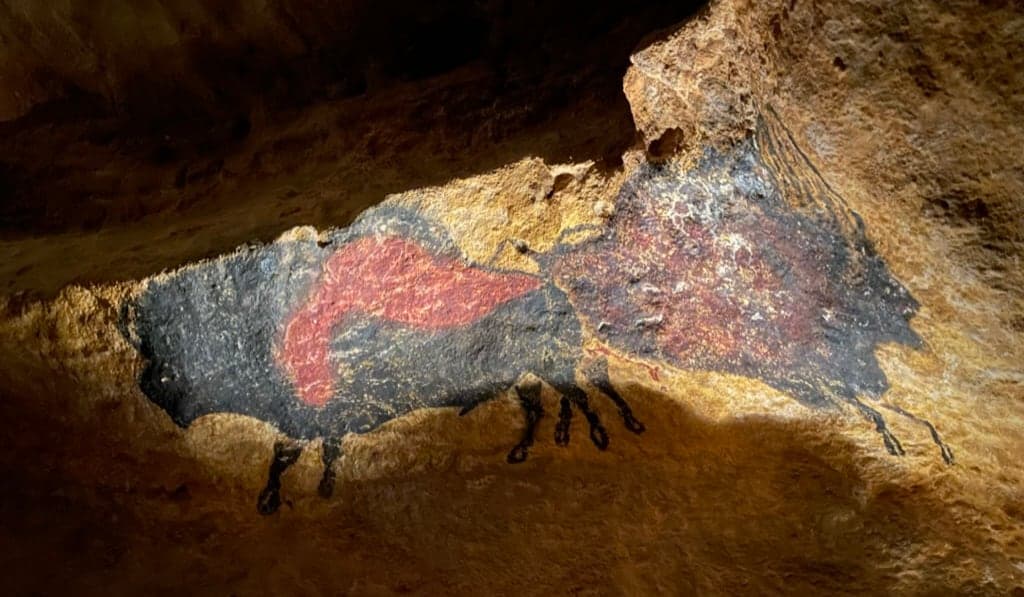
Lascaux IV, the International Cave Art Centre near Montignac, is the essential first stop and the most accessible. The original cave was discovered by four teenagers and a dog in September 1940 and closed to the public in 1963 after carbon dioxide from visitors' breath began destroying the very paintings that made it famous. Lascaux IV, opened in 2016, is the fourth and most technically ambitious replica — a full-scale recreation built using 3D scanning, laser imaging, and hand-applied pigments that reproduce every brush stroke, every smudge of charcoal, every fingerprint left by an artist 17,000 years ago.
The result is genuinely moving. The Hall of the Bulls, the Axial Gallery, the swimming stags — the scale and fluency of the paintings stop most visitors in their tracks. Adults pay around €20 per person; children under 5 enter free, and there are reduced rates for under-13s. Guided tours run in English at set times. In July and August, book 2–3 weeks ahead via the official website; outside peak season you can often book a day or two in advance. Lascaux IV is approximately 25 minutes north of Sarlat and 20 minutes from Les Eyzies.
Font-de-Gaume — Book Months Ahead, Non-Negotiable
If Lascaux IV is the blockbuster, Font-de-Gaume near Les Eyzies is the holy grail. This is the last publicly accessible cave in the world outside a museum that retains its original polychrome paintings — bison, reindeer, mammoths and horses rendered in red, black, and brown ochre by artists working 14,000 years ago. Only 25 people are admitted per guided session, and sessions run just a handful of times per day. That is not a misprint. Twenty-five people.
Demand far outstrips supply: in high season, slots sell out two to three months in advance. This is not a cave you can decide to visit on a Tuesday morning. Book the moment your travel dates are confirmed. Tickets cost approximately €8–€11 per adult (managed by the Centre des Monuments Nationaux and often cheaper than you might expect given the rarity of the experience). Children under 25 with EU citizenship enter free. The cave involves a moderately steep, narrow path and some low passages — not suitable for young children or those with limited mobility, but manageable for most adults and older teenagers.
Les Combarelles — Engraving at Its Most Intricate
A short drive from Font-de-Gaume, Les Combarelles is often visited on the same day. Where Font-de-Gaume is famous for polychrome painting, Les Combarelles is an engraver's cave — its narrow, winding passage contains over 600 individual engravings of horses, bison, bears, rhinoceros, and human figures, layered over one another in a palimpsest of Ice Age imagery. Groups are limited to just six people. Managed by the same booking system as Font-de-Gaume, it carries a similar admission price and the same imperative to book well ahead in summer.
Rouffignac — The Cave of a Thousand Mammoths
Rouffignac, set in the Périgord Noir roughly 15 minutes from Le Bugue, is an entirely different experience — and one that works particularly well for families. The cave extends for over eight kilometres, and visitors explore it aboard a small electric train that winds through the underground galleries for about 45 minutes. The paintings and engravings include an extraordinary frieze of mammoths, rhinoceros facing off against one another, ibex, and horses — more than 250 figures in total. The sheer scale of the cave, the darkness punctuated by the guide's torch, and the novelty of the little train make this one of the most memorable prehistoric sites for children of all ages. Tickets cost around €8–€10 per adult; advance booking is strongly recommended in July and August, though slightly easier to secure than Font-de-Gaume.
Pech Merle — A Day Trip Across the Lot Border
Just over an hour south of Les Eyzies, across the border into the Lot department, Pech Merle near Cabrerets is worth the detour — some would argue it surpasses every cave in the Dordogne for sheer visual drama. The cave contains the famous spotted horses panel, a frieze of mammoths, a handprint stencilled in black ochre, and some of the most beautiful natural formations of any painted cave. Unlike Font-de-Gaume, the natural stalactites and columns coexist with the prehistoric imagery, creating an experience that is geological and archaeological simultaneously. Daily visitor numbers are capped at 700 per day (generous by Font-de-Gaume standards, but still worth booking online in advance). Adult tickets are approximately €14. The round trip from a base in the Vézère valley takes a full day but pairs well with lunch in the medieval village of Saint-Cirq-Lapopie, one of the most beautiful villages in France.
Grotte de Villars: Where Cave Art Meets Geology
Set in the lush Périgord Vert about 30 minutes north of Périgueux, the Grotte de Villars is one of the few caves where authentic prehistoric paintings and spectacular natural formations share the same space. The cave features centuries of dripping water that have built shimmering stalactites, draped columns, and translucent curtains of calcite — alongside original paintings including a rare and delightfully ambiguous depiction of a human figure interacting with a bison. The intimacy of the space gives the art an immediacy that larger sites sometimes lose. Open April through October; booking ahead is advisable in summer but rarely as pressured as the Vézère sites.
Gouffre de Proumeyssac: The Cathedral of Crystal
Near Le Bugue, the Gouffre de Proumeyssac is a geological rather than archaeological wonder — an immense underground chamber filled with dramatic stalactites, crystalline formations, and otherworldly light. Known locally as the Cathedral of Crystal, it was originally accessed only by a winch and bucket. Today's visitors descend via staircase, or — for an experience worth seeking out — in a glass gondola that recreates the original vertiginous entry. Sound and light shows run throughout the day and are particularly effective with younger visitors. From a private holiday home in the countryside near Le Bugue, you are less than ten minutes away.
Grotte du Grand Roc: A Jewel Box Near Les Eyzies
Beside the cliff road just outside Les Eyzies, the Grotte du Grand Roc is a smaller, more intimate cave experience that rewards close attention. Narrow walkways lead past curtains of crystals, translucent aragonite needles, and helictites — formations that grow sideways and upward in apparent defiance of gravity. The cave is adjacent to the Laugerie-Basse prehistoric rock shelter, making it easy to combine geological and archaeological discovery in a single morning. The advantage of a full kitchen back at your villa is that you can stock a proper picnic and turn the afternoon into a leisurely riverside affair rather than a rushed café lunch.
Gouffre de Padirac: The Underground River
Another essential day trip into the Lot, the Gouffre de Padirac plunges over 100 metres into the earth via a vast natural chasm. After descending by lift or staircase, visitors walk through echoing galleries before boarding a flat-bottomed boat to glide along a subterranean river beneath ceilings that soar 30 metres overhead. The Grand Dome chamber, the Lac des Gours with its natural calcite dams, and the sheer scale of the experience make this one of the most-visited natural sites in France — deservedly so. Book tickets online well in advance in July and August; a visit combines naturally with Rocamadour, 40 minutes to the west.
Practical Notes: Ages, Access, and What to Wear
Underground temperatures in these caves remain a constant 12–14°C year-round — refreshing in August, genuinely cold after an hour in January. Always bring a light fleece or jacket regardless of the weather above ground. Comfortable, closed-toe walking shoes are essential; several caves involve uneven stone paths or slightly stooped passages.
- Font-de-Gaume and Les Combarelles: best for adults and teenagers; narrow passages and low ceilings make them unsuitable for very young children or pushchairs
- Rouffignac: excellent for all ages, including young children, thanks to the electric train
- Lascaux IV: suitable from around age 5 upwards; the immersive multimedia sections engage older children particularly well
- Pech Merle: suitable from around age 7 upwards; some walking on uneven surfaces
- Gouffre de Padirac: suitable for most ages; the boat section delights children
Most sites offer guided tours in French as standard, with English-language tours at set times or audio guides available. Booking directly via each cave's official website is always the most reliable method — third-party aggregators sometimes show availability that has already been taken.
Frequently Asked Questions
Do I need to book cave visits in advance?
For Font-de-Gaume and Les Combarelles, advance booking is not just recommended — it is essential, especially between May and September. Book as soon as your travel dates are confirmed, ideally two to three months ahead. Lascaux IV should be booked two to three weeks ahead in July and August. Rouffignac and Pech Merle have more capacity but still benefit from online booking. Gouffre de Proumeyssac and Grotte du Grand Roc are easier to access on shorter notice.
How much do cave visits cost in the Dordogne?
Prices vary by site. Lascaux IV is approximately €20 per adult, with reduced rates for children. Font-de-Gaume and Les Combarelles cost around €8–€11 per adult (EU residents under 25 enter free at national monument sites). Rouffignac is approximately €8–€10 per adult. Pech Merle is around €14. Gouffre de Padirac costs approximately €14–€16 per adult depending on the season. A family of four completing the full circuit should budget around €150–€200 for cave entry fees across a week.
Is Font-de-Gaume really the last open polychrome cave?
Yes — it is a genuinely remarkable fact. Font-de-Gaume near Les Eyzies is the only cave in the world, outside a museum context, where the public can view original polychrome (multi-colour) Palaeolithic paintings in situ. Every other major painted cave of comparable quality is either closed entirely (like the original Lascaux) or accessible only to researchers. This is what makes it so extraordinary — and why 25 people per session is the maximum the authorities permit.
Are the caves suitable for young children?
Several are excellent for children. Rouffignac, with its electric train winding through galleries of mammoth engravings, is a highlight for children of all ages. Lascaux IV's multimedia elements engage older children well. Gouffre de Padirac's boat ride is magical for families. Font-de-Gaume and Les Combarelles are better suited to adults and older teenagers, due to narrow passages and the need for quiet, focused attention during small-group guided sessions.
How many caves can we realistically visit in a week?
Four to five caves is a comfortable pace for a week's stay, allowing half-days for villages, markets, and simply enjoying your villa with pool Dordogne-style. A suggested circuit: Day 1 Lascaux IV (half-day, leaves time for Montignac village); Day 2 Font-de-Gaume and Les Combarelles (both near Les Eyzies, bookable as a morning double); Day 3 Rouffignac (relaxed morning, afternoon free); Day 4 full-day Lot excursion combining Pech Merle and Saint-Cirq-Lapopie; Day 5 Gouffre de Padirac and Rocamadour.
Where is the best base for visiting the prehistoric caves?
The Vézère valley itself is ideal — a holiday rental Dordogne property within 20 minutes of Les Eyzies puts you at the geographic centre of the cave circuit. The Périgord Noir more broadly, including the area around Sarlat and the Dordogne river valley, works equally well. Most of the key sites are within 45 minutes of Sarlat, and the Lot caves (Pech Merle, Padirac) are a comfortable day trip. Staying in a private villa rather than a hotel means you can build each day around your timed bookings without the constraints of a fixed meal schedule.
What should we wear to visit the caves?
Regardless of surface temperature, underground caves in the Dordogne maintain a year-round temperature of around 12–14°C. Bring a fleece or light jacket even in the height of summer — after an hour below ground you will be glad of it. Wear closed-toe shoes with a grip sole; several caves have uneven, sometimes slippery stone paths. Avoid sandals, flip-flops, or heels. A small daypack is useful for jackets and water bottles.
Can I photograph inside the caves?
Policies vary. At Lascaux IV photography is generally permitted as it is a replica. At Font-de-Gaume and Les Combarelles, photography is restricted to protect the original pigments from flash damage — guides will advise on arrival. At most geological caves (Proumeyssac, Grand Roc, Padirac) photography without flash is usually permitted. Always follow the guide's instructions; the fragility of these places is precisely why they have survived this long.
Returning Above Ground
There is something particular about the transition from a prehistoric cave back into the sunlit Dordogne afternoon — the contrast between deep time and the very immediate pleasures of a cold glass of Bergerac rosé beside a private pool. Many of our guests find that the cave circuit and the rhythm of a private villa complement each other perfectly: focused, sometimes awe-inducing mornings underground, followed by long, unhurried afternoons cooking with market produce, swimming, and sitting in a garden that looks much as it has for centuries.
The Dordogne Collection holiday property collection includes carefully chosen villas and farmhouses across the Périgord Noir and Vézère valley, positioned precisely for this kind of itinerary. If you are planning a family holiday Dordogne-style, or a slower luxury holiday Périgord trip for two, we are happy to suggest properties that suit both your party and your cave-week ambitions. Browse our collection or get in touch — we know this landscape well, and we love sharing it.