The Dordogne is not one place, but many. Its four historic regions — Périgord Vert, Blanc, Noir and Pourpre — each offer something entirely distinct, from prehistoric river valleys to sun-warmed wine country. Here is your honest guide to finding the right corner for your holiday.
The Dordogne is not one place, but many. Its timeless appeal lies in the diversity of its four historic regions: the Périgord Vert, Périgord Blanc, Périgord Noir and Périgord Pourpre. Each offers a distinct tapestry of landscapes, flavours, and experiences, woven together by a spirit of authenticity and deep-rooted tradition. Whether you are dreaming of misty forests, riverside picnics, vibrant market towns, or sunset-drenched vineyards, this guide will help you find your perfect corner — and, crucially, decide where to base yourself for a holiday rental in the Dordogne that genuinely suits the kind of trip you want.
The Périgord Vert: Forests, Rivers and Genuine Quiet
The Périgord Vert, or Green Périgord, occupies the northern reaches of the department and earns its name honestly. Oak forests, rolling meadows and a network of clear rivers define a landscape that feels genuinely unspoiled — less visited than the south, and better for it. This is not a region of famous châteaux or packed tourist markets. It is somewhere you come to breathe.
At its heart lies Brantôme, a town of quiet beauty built around a Benedictine abbey on an island in the river Dronne. Often called the Venice of the Périgord, it rewards an unhurried morning walk along the waterways and a long lunch in one of the riverside restaurants. The surrounding Parc Naturel Régional Périgord-Limousin offers some of the best walking and cycling in southwest France — waymarked trails through ancient woodland, past working farms and over limestone ridges with views that stop you in your tracks.
The rivers Dronne and Bandiat are excellent for kayaking and wild swimming, and the pace of life throughout the Périgord Vert makes it particularly well suited to families with young children, naturalists, and anyone who finds the more celebrated parts of the Dordogne a little overwhelming in July and August. Prices — for restaurants, markets and holiday rentals alike — tend to be noticeably lower than in the Périgord Noir. When you are based in a stone farmhouse here, with countryside stretching in every direction, the absence of crowds feels like a luxury in itself.
The Périgord Blanc: Roman Roots and Slow Living
The Périgord Blanc, or White Périgord, takes its name from the pale limestone that surfaces across its gently rolling landscape. Geographically central and frequently overlooked by first-time visitors, this is perhaps the most authentically local part of the Dordogne — a region where you are more likely to find yourself at a village fête alongside actual residents than at a destination designed for tourists.
Its capital, Périgueux, is one of the most underrated cities in southwest France. A Roman settlement of genuine significance, it retains an extraordinary cathedral — the Cathédrale Saint-Front, with its distinctive Byzantine domes — alongside Roman amphitheatre ruins, a beautifully preserved medieval quarter, and a Saturday market that is as good as any in the region. Allow a full day here, and do not leave without visiting the covered market for foie gras, walnut oil, and the local charcuterie.
The Périgord Blanc rewards slow travellers: those who want to explore at their own pace, eat well without spending a fortune, and feel like they have actually discovered somewhere rather than followed a guidebook trail. Staying in a private villa rather than a hotel means you can settle into the rhythm of local life — shopping at the village market, cooking in a full kitchen, driving out to a different village each morning. Excellent value, genuine warmth, and almost no queues.
The Périgord Noir: The Classic Dordogne Experience
If the Dordogne has a crown jewel, it is the Périgord Noir. Dense oak forests, amber-stone villages, prehistoric cave art and a string of medieval châteaux perched above one of France's most beautiful rivers — this is the Dordogne of the imagination, and it earns every word of its reputation.
Sarlat-la-Canéda is the natural hub: a medieval market town so well preserved it has served as a film set on multiple occasions, and whose Saturday market remains one of the great sensory experiences of rural France. Foie gras, black truffles, walnuts, Périgord strawberries, and roast duck — the stalls alone justify the journey. From Sarlat, the valley of the Dordogne River unfurls in both directions, passing the cliff-top villages of La Roque-Gageac and Domme, the rival châteaux of Beynac and Castelnaud, and the extraordinary prehistoric paintings of Lascaux (now experienced via the remarkable Lascaux IV visitor centre, roughly 45 minutes north).
This is the most visited part of the Dordogne, and for good reason — but it rewards those who structure their days well. Many of our guests find that staying in a private holiday home in the Périgord Noir countryside, a few kilometres outside Sarlat, gives them the best of both worlds: easy access to the main sites without being inside the tourist bubble. A private pool means the heat of a July afternoon becomes a pleasure rather than a problem, and you can be at the château gates before the coaches arrive. The Périgord Noir is the natural choice for first-time visitors to the region, and for families who want the highest density of things to do within easy reach.
The Périgord Pourpre: Wine, Food and Southern Warmth
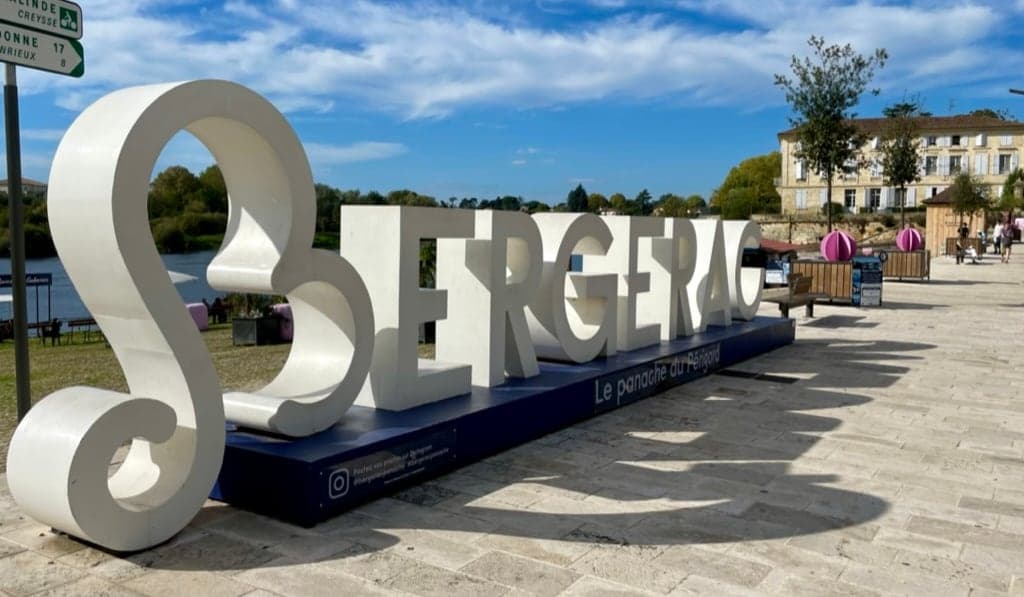
The southwestern corner of the Dordogne belongs to the Périgord Pourpre — the Purple Périgord, named for the deep colour of the Bergerac vineyards that roll across its gentle hills. This is wine country in the fullest sense: appellations include Bergerac, Monbazillac, Pécharmant and Saussignac, and the vignerons here are as passionate about their craft as any in Bordeaux, with considerably less formality.
The town of Bergerac itself sits astride the Dordogne River, its old quarter a pleasing tangle of timber-framed houses, wine bars and riverside terraces. There is a genuinely good food scene here — both in the town and in the surrounding villages — and the weekly markets carry a southern exuberance that feels slightly different from those further north. An hour's drive takes you to Monpazier, arguably the finest of the medieval bastide towns that dot this part of France, its perfectly proportioned arcaded square seemingly unchanged in seven centuries.
The Périgord Pourpre is ideally suited to couples, food and wine lovers, and anyone who wants a gentle, unhurried holiday with excellent eating at its centre. The advantage of a full kitchen in a private villa is particularly felt here — the local markets are outstanding, and cooking with Périgord ingredients in your own space, with a glass of Monbazillac on the terrace, is one of the simple pleasures of a luxury holiday in the Périgord. The climate, too, feels marginally warmer and more reliably sunny than the north of the department.
Where to Base Yourself: An Honest Guide
Choosing where to stay in the Dordogne is not simply a question of geography — it shapes the entire character of your holiday. Here is a straightforward breakdown to help you decide.
Périgord Noir — for first-timers and families
This is where most visitors start, and it is easy to see why. The Périgord Noir offers the highest concentration of things to do: Sarlat's market (Wednesday and Saturday), the river châteaux, prehistoric cave sites, river kayaking, and some of the best restaurants in the department. Most villa with pool Dordogne properties are found here, typically set in woodland or on hillsides within 10–25 minutes of Sarlat. It is the most dramatic and most cinematic part of the region, but it can be busy in July and August — which is precisely why staying in a private holiday home rather than in a hotel in town makes such a difference. Book early; the best properties fill by January.
Périgord Vert — for walkers, naturalists and those seeking peace
If your idea of a perfect holiday involves long mornings, forest walks, and very few other tourists, the Périgord Vert is where you belong. Fewer visitors, lower prices, extraordinary natural beauty, and the kind of authentic village life that the more celebrated parts of the Dordogne can struggle to offer in high season. Brantôme is around 30 minutes from Périgueux and roughly 90 minutes from Sarlat — manageable for day trips if you want to venture south, but most guests here find they rarely need to. Ideal for family holidays in the Dordogne with older children, for cyclists, and for anyone who wants genuine rest.
Périgord Blanc — for slow travellers and culture seekers
The most underrated base in the department. Périgueux is a proper French city with excellent transport links — direct trains to Bordeaux take around 70 minutes — and a cultural richness that surprises most visitors. The surrounding countryside is gentle, the prices are honest, and you will rarely feel that you are on a tourist trail. A holiday rental in the Dordogne here typically offers outstanding value for the standard of property. Best suited to couples, solo travellers, and those who want a slower, more immersive experience of French life.
Périgord Pourpre — for food and wine lovers and couples
Choose Bergerac and its surrounding wine villages if the table is the centre of your holiday. Private wine tastings, farm-to-table restaurants, excellent local markets, and a warmth of climate and character that feels slightly more southern than the rest of the Dordogne. The bastide towns — Monpazier, Eymet, Issigeac — are among the most beautiful in France and far less visited than the villages of the Périgord Noir. Bordeaux is around 90 minutes by road, making a day trip to the wine capital perfectly feasible. Well suited to couples and to multigenerational groups who want excellent food at the heart of their stay.
Whichever corner of the Dordogne calls to you, the team at Dordogne Collection can help you find the right base. Our curated collection of luxury holiday villas in the Périgord spans all four regions, from timber-framed farmhouses in the Périgord Vert to stone manor houses above the Dordogne valley in the Périgord Noir. If you are unsure where to begin, we are always happy to talk it through — matching the right property to the right kind of trip is what we do best.