Less famous than its Bordeaux neighbour, the Bergerac wine region remains an insider's secret — substance, character, and extraordinary value, without the crowds. From Pécharmant to Monbazillac, and a three-day circuit of the finest estates in Périgord Pourpre, this is wine country at its most intimate and unhurried.
In the Dordogne, wine is not just something you drink. It is woven into the rhythm of everyday life — into the light on the hillsides at six in the evening, into the ritual of the long lunch, into the way a conversation slows and deepens when the second bottle arrives. The Bergerac wine region reveals itself with quiet elegance: thirteen appellations, iron-rich soils, a warm and welcoming community of growers, and wines that consistently over-deliver on quality relative to their price. Less famous than Bordeaux next door, this remains a genuine insider's secret — and one that rewards those who take the time to explore it properly.
The best way to explore this wine country is not from a hotel bar or a tour bus, but from a private base in the countryside itself. Many of our guests find that staying in a private villa rather than a hotel changes the entire character of a wine trip. You can set your own pace, store the bottles you acquire along the way, and end each day on a terrace with a glass of something you chose yourself that morning — rather than whatever is open at the hotel restaurant. A week spent this way has a particular quality of pleasure that is difficult to replicate.
Pécharmant: The Red Wine Standard-Bearer
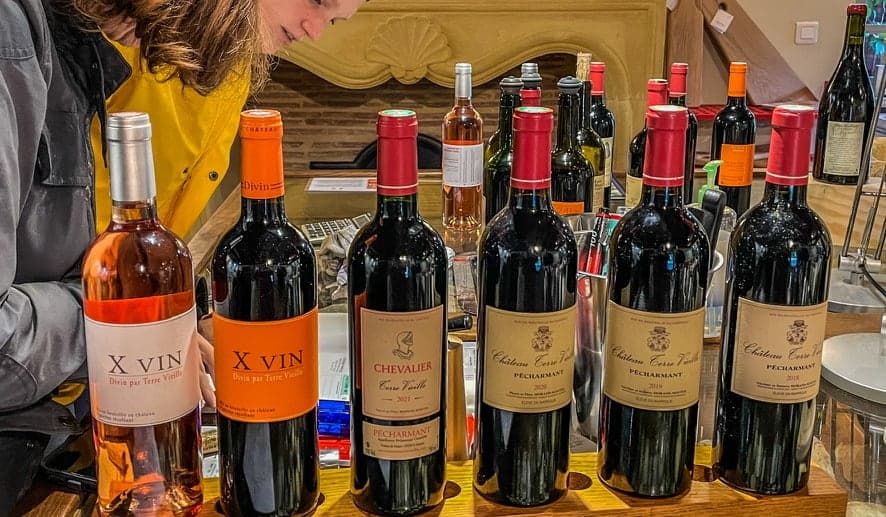
Pécharmant is the most celebrated red wine appellation of the Dordogne, producing structured, age-worthy wines from Merlot, Cabernet Sauvignon, and Malbec grapes grown on the iron-rich, gravel-topped soils east of Bergerac — roughly 10 minutes by car from the town centre. Expect notes of blackcurrant, spice, tobacco, and earthy minerality in the better examples; at their finest, these reds can hold their own against a mid-range Pauillac and cost a fraction of the price.
They pair beautifully with the region's staple dishes — duck confit, venison stew, aged Cabécou goat's cheese — and are the natural choice for a long dinner at the kitchen table of a stone farmhouse. When you are based in a stone farmhouse in the Périgord countryside, a bottle of Pécharmant opened an hour before dinner, breathing quietly on the counter while you cook, feels entirely right. Château de Tiregand and Château Terre Vieille both offer cellar tours amid sweeping vineyard views and are well worth an afternoon of your time.
Monbazillac: Sweet Wine, Golden Views
On the hills just south of Bergerac, the Monbazillac vineyards overlook the Dordogne valley with quiet grandeur. This AOC is famed for its botrytised sweet white wines — luscious, honeyed, with flavours of apricot, quince, orange blossom, and warming spice. Monbazillac is the classic companion to foie gras, and no visit to the region is complete without a glass poured at Château de Monbazillac itself, where the panoramic views across the valley are as arresting as the wine. The château is open to visitors daily in summer; expect to pay around €5–8 for a guided tasting.
Saussignac: A Gentle, Organic Surprise
Often described as Monbazillac's quieter cousin, Saussignac produces sweet white wines that are softer, more floral, and less concentrated — perfect for those who find Sauternes-style wines too overwhelming, or who are drawn to the natural wine movement. This small AOC has become a stronghold of organic and biodynamic viticulture. Family estates such as Château Feely and Château Richard offer tastings that are personal, educational, and often accompanied by walks through the vines — the kind of visit that turns a casual interest in wine into a genuine passion.
Bergerac Sec: The Crisp and the Curious
Bergerac Sec designates the region's dry white wines, typically produced from Sauvignon Blanc, Sémillon, and Muscadelle. Fresh and aromatic, with notes of citrus, white flowers, and green herbs, these are ideal aperitif wines — the kind you open the moment you arrive back at the villa after a day of driving the back roads. Visit Château Laulerie or Domaine du Grand Mayne for relaxed, scenic tastings within easy reach of central Bergerac. Bottles typically run from €7 to €15, making it easy to stock up generously.
A Wine Tasting Week from a Private Base in Périgord Pourpre
For those who want to organise a structured wine itinerary, Périgord Pourpre — the southern, purple-hued quarter of the Dordogne, named for the colour of its vines in autumn — rewards a dedicated three-day circuit. Based in a private holiday home in the countryside, you have the freedom to move at your own pace, return for lunch when the mood takes you, and accumulate a mixed case without worrying about what fits in a hotel wardrobe. The estates described below are among the most rewarding in the region: each has a distinct personality, a compelling story, and wines worth carrying home.
Day One: Château de Tiregand and the Pécharmant Hills
Château de Tiregand sits approximately 8 kilometres northeast of Bergerac and is consistently regarded as one of the finest Pécharmant producers working in the appellation today. The estate has been in the same family for generations, and that continuity shows in the wines — there is a patience to them, a sense of place accumulated over decades of working the same iron-rich soils. The château welcomes visitors for guided cellar tours and tastings; book in advance by contacting the estate directly by email or telephone, as visits are typically offered on weekday mornings. A tasting of three to five wines costs in the region of €8–12 per person. Their flagship red, the Grand Millésime, is worth seeking out in older vintages if your budget allows — it is the kind of wine that makes you reconsider everything you thought you knew about the price of quality.
Combine the morning with a stop at Château Terre Vieille nearby, a smaller producer with a more intimate feel and excellent value across their entire range. Together, the two estates offer a thorough introduction to what Pécharmant does at its best. Allow a full morning, and plan to return to your holiday rental Dordogne base for a slow lunch before the afternoon settles in.
Day Two: Clos d'Yvigne and the Story Behind the Wine
No serious wine visit to the Dordogne is complete without a detour to Clos d'Yvigne, near Sigoulès, around 12 kilometres southwest of Bergerac. This small estate is inseparable from the story of Patricia Atkinson, the Englishwoman who arrived in the Dordogne in the 1990s with no winemaking experience, built a reputation through sheer determination and meticulous attention to the vines, and went on to produce wines that earned serious critical recognition across France and beyond. Her memoir, The Ripening Sun, is worth reading before your visit — it gives the landscape and the labour a weight that you feel when you stand in the vines.
The estate produces both dry whites and a superb Saussignac — wines of real finesse that punch well above their modest price points. Visits are possible by appointment; email or telephone ahead to arrange a tasting, which typically includes a walk through the vines and a conversation that rarely feels like a sales pitch. Budget around €10 per person for the experience, and expect to leave with at least a half-case. This is exactly the kind of estate where a family holiday Dordogne itinerary benefits from slowing down and spending longer than planned.
Day Three: Château Tour des Gendres and Domaine de l'Ancienne Cure
Château Tour des Gendres, run by the de Conti family near Ribagnac, is one of the region's most significant estates — a biodynamic pioneer that helped reshape how the Dordogne thinks about viticulture long before biodynamics became fashionable elsewhere. The de Contis work across the full range of Bergerac appellations, from crisp Bergerac Sec to structured reds and honeyed sweets, and the quality is consistently impressive. Their commitment to the health of the soil is evident in the wines: there is a clarity and a precision to them that you do not always find at this price level. Visits are available and can be arranged directly with the estate; allow two hours if you want to walk the property properly and understand what biodynamic farming looks like in practice. Prices for their Moulin des Dames range — widely considered their finest — sit between €15 and €25, which represents exceptional value for wines of this calibre.
Round off the three-day circuit with a visit to Domaine de l'Ancienne Cure, the benchmark estate for Monbazillac, located near Colombier. Winemaker Christian Roche has spent decades perfecting his sweet wines, and the Jour de Fruit cuvée in particular is a lesson in how good Monbazillac can be when the winemaker has the patience and skill to let the grapes dictate the schedule. The estate welcomes visitors and offers structured tastings without the formality that can make some wine visits feel like an examination. Bottles begin at around €10 for the dry whites and climb to €20–30 for the prestige Monbazillac cuvées. Buy generously — these wines are genuinely difficult to find outside the region, and the Monbazillac in particular improves with a few more years in bottle if you have somewhere cool to store it.
Wine and the Villa Experience
There is a particular satisfaction in arriving back at a private holiday home in the Dordogne with a mixed case assembled over three days of careful, unhurried tasting. You know exactly what you bought, where the vines grow, and who made each bottle. The advantage of a full kitchen is that you can plan dinner around the wine rather than the other way around — a slow-cooked magret with the Tiregand Grand Millésime, a board of local cheeses with the Tour des Gendres Bergerac Sec, the Ancienne Cure Monbazillac alongside a slice of walnut tart from the Saturday market in Issigeac. The meal becomes a continuation of the day's visits rather than a separate event.
A private pool means the afternoon between the morning's tastings and the evening's cooking belongs entirely to you — no schedule, no other guests, no restaurant reservation to honour. When you are based in a stone farmhouse in the Périgord countryside, the rhythm of a wine week slows to something deeply restorative. Many of our guests find that keeping even a modest supply of wine — a few bottles of each estate's range — in a cool cave or shaded utility room for the duration of their stay transforms the experience entirely. You return each evening not to a minibar but to a small, personally curated cellar, with the evening's bottle already chosen and the conversation already half-formed around it.
Evening wine on the terrace, as the light drops behind the tree line and the swallows come out, is one of those pleasures that requires very little — a good glass, a view, and a wine that means something because you were there when it was poured for you from the barrel. Staying in a private villa rather than a hotel makes that moment unhurried and entirely your own.
Food and Wine Pairing in the Dordogne
The region's wine culture is inseparable from its cuisine, and the pairings are rarely accidental. A bold Pécharmant brings out the best in duck confit or a slow-braised rabbit. A crisp Bergerac Sec cuts beautifully through the richness of a goat's cheese and truffle omelette. A chilled glass of Monbazillac alongside foie gras is one of those combinations so well-matched it feels almost unfair to the rest of the wine world. And the Saussignac, poured over a walnut tart still warm from the oven, is the kind of thing you describe to people back home and struggle to adequately convey.
Many wineries offer informal lunch pairings or can point you toward nearby restaurants where their wines are poured with serious attention. Don't be surprised if a casual morning tasting extends into a sun-drenched afternoon of conversation, second pours, and a standing invitation to come back next harvest.
Frequently Asked Questions
Do I need to book wine estate visits in advance?
For most estates in the Bergerac region, booking ahead is strongly recommended, particularly in July and August when visitor numbers increase significantly. Estates like Château de Tiregand, Clos d'Yvigne, and Domaine de l'Ancienne Cure all welcome visitors but prefer appointments arranged by email or telephone a few days in advance. Château de Monbazillac is open without prior booking in summer, but even there, arriving outside peak hours makes for a better experience. Château Tour des Gendres also accepts visitors by arrangement — contact the estate directly via their website.
How much should I budget for wine tastings in the Dordogne?
Tastings in the Bergerac region are refreshingly affordable compared to Bordeaux or Burgundy. Most estates charge between €5 and €15 per person for a guided tasting of three to six wines, often with the fee waived or applied toward any purchase. Bottles across the region range from around €7 for everyday Bergerac whites to €25–35 for prestige Monbazillac cuvées. A couple spending three days visiting estates and assembling a mixed case could do so comfortably for under €200, including the tastings themselves.
Is the Bergerac wine region easy to navigate by car?
Yes — and a car is genuinely the best way to explore it. The main appellations are spread across a roughly 30-kilometre radius east and south of Bergerac town, connected by quiet country roads that are a pleasure to drive. Pécharmant estates sit 10–15 minutes east of Bergerac; Monbazillac is around 8 kilometres to the south; Saussignac is about 20 minutes southwest; Clos d'Yvigne near Sigoulès is approximately 12 kilometres from town. The obvious caveat is the need for a designated driver, which is one reason a villa stay with multiple guests travelling together works so well — you can rotate the role sensibly and no one misses out entirely.
What makes Pécharmant different from Bordeaux red wines?
Pécharmant uses the same grape varieties as many Bordeaux reds — Merlot, Cabernet Sauvignon, Cabernet Franc, and Malbec — but the iron-rich, gravel-topped soils east of Bergerac give the wines a distinctive earthy, mineral quality. They tend to be slightly more rustic and food-friendly than their Bordeaux counterparts, with less of the polished tannin structure found in classified Médoc wines. They are also considerably less expensive, which makes them among the best-value serious reds in France. Château de Tiregand's Grand Millésime, for instance, offers complexity that would cost three times as much across the border.
What is the story behind Clos d'Yvigne and why is it worth visiting?
Clos d'Yvigne was established by Patricia Atkinson, a British woman who moved to the Dordogne in the 1990s with no prior winemaking experience and built a respected estate through determination, hard work, and a genuine sensitivity to the land. Her memoir The Ripening Sun documents the journey in compelling detail and is worth reading before your visit. The wines — particularly the Saussignac — are elegant, precise, and offer excellent value. A visit here feels less like a commercial tasting and more like a conversation with someone who truly understands what the land is capable of. It is one of the most personally affecting wine visits you can make in the region.
Can I bring wine home to the UK or elsewhere in Europe?
UK travellers can bring back 18 litres of still wine (equivalent to 24 standard bottles) per adult without paying duty when travelling by car or Eurotunnel. For travel within the EU, there is no practical limit for personal use. Most estates are happy to help you pack bottles securely, and purpose-made wine carry bags are widely available locally. A week-long villa stay — with a full kitchen, a cool utility room, and no luggage restrictions to worry about until the final morning — gives you the space and time to accumulate a proper mixed case, which many of our guests plan as a central purpose of their trip.
Which Dordogne wine pairs best with foie gras?
Monbazillac is the traditional and definitive answer — its honeyed sweetness, balancing acidity, and notes of dried apricot and orange peel cut through the richness of foie gras with elegant precision. Domaine de l'Ancienne Cure's Jour de Fruit is a particularly fine choice. Saussignac is a slightly lighter alternative for those who prefer a less intensely sweet wine. If you are serving foie gras as a starter rather than a centrepiece, a chilled Bergerac Sec can also work well, offering a crisp contrast rather than a sweet complement.
Is the Dordogne a good destination for wine tourism beyond just tastings?
Absolutely. The wine country here sits within one of the most beautiful and historically rich regions of France, so there is never a sense that wine is the only reason to be here. A morning at an estate near Monbazillac can be followed by an afternoon in Sarlat-la-Canéda (around 50 minutes east of Bergerac), a visit to the prehistoric caves of the Vézère Valley, or a lazy lunch at a riverside restaurant in Bergerac itself. The Saturday market at Issigeac, about 20 minutes from central Bergerac, is one of the finest in the region and pairs naturally with a morning of wine visits. Many of our guests build itineraries that weave wine visits into a broader exploration of the Dordogne — and find the combination hard to improve upon.
If a week in the Dordogne wine country sounds like your kind of travel, the DordogneCollection holiday property collection offers a carefully curated range of private villas and farmhouses positioned across Périgord Pourpre and beyond — many within easy reach of the key appellations, several with cool storage space for a growing collection of bottles, and all chosen for the quality of the experience they offer. Whether you are planning a dedicated wine week, a luxury holiday Périgord, or simply looking for the right place to base a family holiday Dordogne with wine country woven through it, browse our properties to find the private base from which your own wine week might begin.