Autumn transforms the Dordogne into its most delicious, most beautiful and least crowded version of itself. From the walnut harvest in October to the first truffle markets of November, here is everything you need to know about visiting the Périgord in the finest season of the year.
Ask anyone who has spent a September or October in the Dordogne and they will tell you the same thing: autumn is the season they did not expect to love most. The crowds have gone, the countryside has turned amber and gold, the kitchen is suddenly the most important room in the house — and the markets are laden with things you simply cannot find anywhere else.
September: Mushrooms, Chestnuts and the Vendange
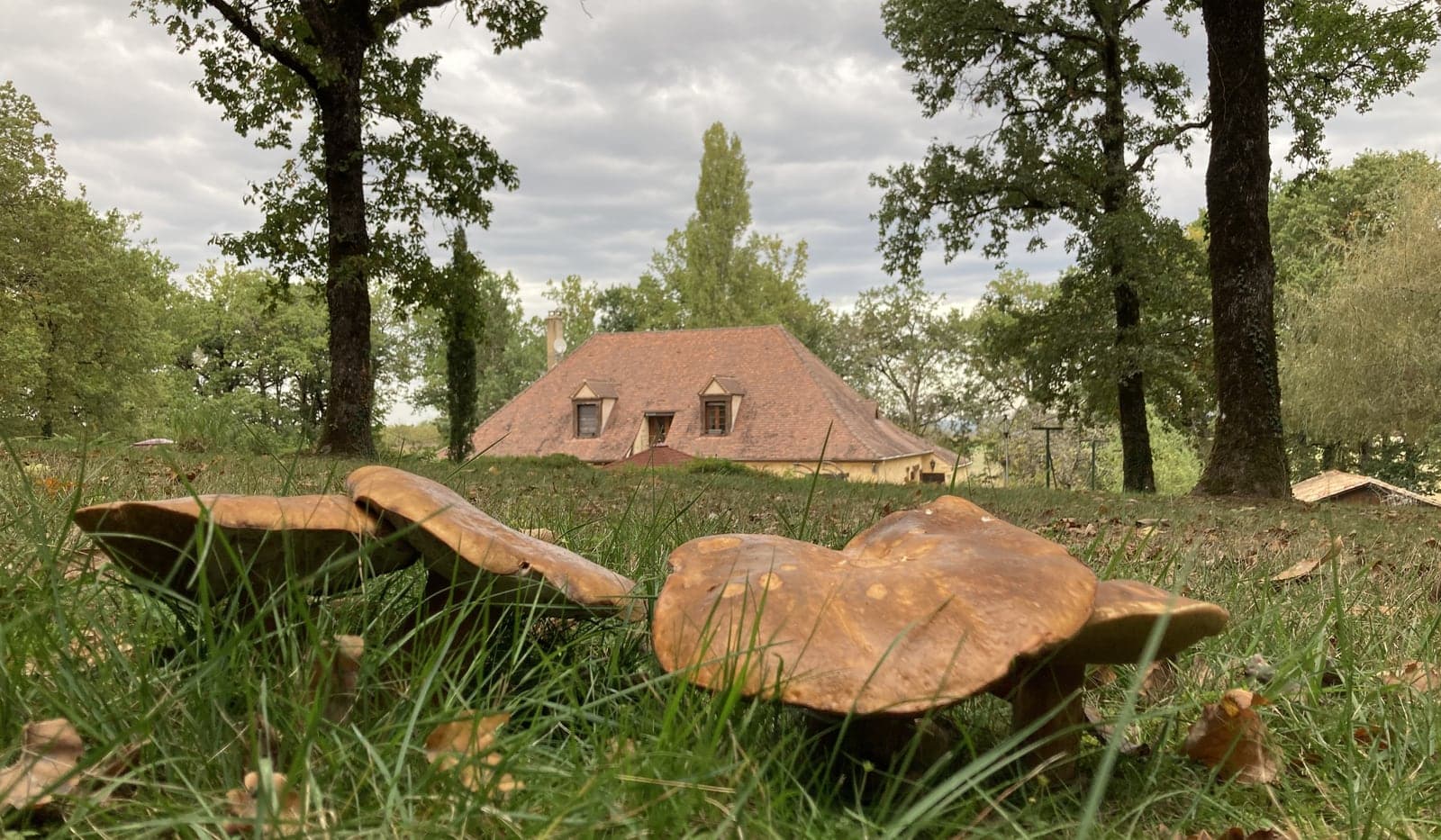
The transition begins quietly. In early September the summer heat softens, the mornings carry a first edge of cool air, and the forests around Périgueux and the Vézère Valley begin releasing their first cèpes — the fat, nutty porcini that Périgord cooks treat with near-religious reverence. Local markets fill with baskets of them; restaurants change their menus almost overnight. If you are staying in a private holiday home in the countryside, with a full kitchen at your disposal, buying a kilo of fresh cèpes from a farm stall and cooking them simply in butter and garlic is one of the more quietly joyful things you can do on a French holiday.
Chestnuts follow close behind. The Sarladais and the woods of the Périgord Noir are thick with sweet chestnut trees, and by mid-September the first harvests are under way. Roadside stalls appear selling fresh chestnuts to roast, chestnut flour, and jars of crème de marrons that belong in your luggage on the way home. September is also the start of the hunting season, which in this part of France is a serious social institution: on Sunday mornings you will hear the occasional distant crack of a rifle and see the local chasseurs assembling in village squares in their orange vests, accompanied by dogs of improbable enthusiasm.
Twenty minutes south-west of Bergerac, the Bergerac wine region stages its vendange — the grape harvest — throughout September. The Monbazillac appellation, producing its famous sweet golden wine, is particularly worth visiting at this time of year. Several châteaux welcome visitors during harvest, and a bottle of Monbazillac bought direct from the domaine, at around €8–12, is among the best-value wine souvenirs in France.
October: The Walnut Harvest
The Périgord produces roughly thirty percent of France's walnuts, and October is the month that defines the region's culinary identity as much as any other. Along the roads between Sarlat and Souillac, and throughout the valleys of the Dordogne and Vézère rivers, you will see families laying out large tarps beneath walnut trees, then shaking the branches — or using long poles — to bring the nuts cascading down in their green hulled jackets. The smell is extraordinary: green, sharp, faintly tannic, deeply earthy. It fills the air for weeks and becomes, ever after, inseparable in your memory from golden light and the sound of leaves.
Farm roadside stalls spring up almost everywhere in October, selling fresh walnuts by the kilogram (expect to pay around €3–5 per kilo), walnut cake, walnut liqueur, and the product that serious cooks come specifically to find: huile de noix du Périgord IGP. This cold-pressed walnut oil — IGP meaning its geographical origin is legally protected — is made from dried and roasted kernels using a process essentially unchanged for centuries. The flavour bears almost no resemblance to the thin, faintly bitter oils sold in supermarkets. It is warm, rounded and deeply nutty, and a single bottle used over a winter's worth of salads, goat's cheese, grilled fish and crusty bread will change your understanding of what a finishing oil can be.
The place to see the process properly is the Moulin de la Tour in Sainte-Nathalène, a working water-powered mill about ten minutes east of Sarlat that has been pressing walnut and hazelnut oil since the sixteenth century. Visits are free, the staff are generous with tastings, and you can buy oil direct from the mill — a litre of their walnut oil costs around €14–16 and is worth every centime. For the full festive experience, the Foire à la Noix du Sarladais, held in Sarlat in late October, brings together producers, cooking demonstrations, walnut-cracking competitions and a general atmosphere of extremely well-fed contentment. Many of our guests make it the focal point of an October stay.
November: Foie Gras, Truffles and the Markets Begin
If October belongs to the walnut, November belongs to two ingredients that define Périgord cuisine at its most serious: foie gras and truffles. Duck and goose foie gras production is at its peak through November and December, and the farm shops and weekly markets of the region reflect it. In Sarlat's Saturday market — already one of the finest food markets in France — the foie gras stalls multiply and the smell of confit and magret de canard drifts across the square. Buying foie gras direct from a producteur farm, where you can ask questions and understand what you are purchasing, is a very different experience from a supermarket shelf. Prices for a whole raw lobe of duck foie gras typically range from €40–60 per kilo depending on quality and the producer.
The first truffle markets of the season open in November. Sainte-Alvère, a small village about 25 minutes north-west of Sarlat, runs one of the Dordogne's most respected truffle markets every Monday from November through to March — it is businesslike, unhurried, and gives a genuine sense of how the truffle trade actually works. Sarlat's dedicated truffle market opens in late November, building towards the grand markets of January when the black Périgord truffle — Tuber melanosporum — is at its most abundant and fragrant. If you are staying in a villa with a full kitchen during November, buying a small truffle at market (prices begin at around €80–100 per 100g, so a little goes a long way) and making a simple truffle omelette or truffle-scrambled eggs is an experience that will stay with you considerably longer than any restaurant meal.
Why Autumn is the Best-Kept Secret for Villa Rentals
All of this culinary richness coincides with what is, for our money, the most beautiful time of year in the Dordogne. The limestone cliffs of the Vézère valley glow in the lower autumn light; the oak and chestnut forests turn amber, copper and deep gold; the rivers run quiet and clear. And the practical advantages of visiting in autumn are considerable.
- Prices drop by 20–30% compared with peak July and August rates for holiday rentals, including villas with private pools.
- Zero queues at the most visited sites — the caves at Font-de-Gaume (timed tickets, limited numbers) become genuinely bookable; the châteaux of the Dordogne valley are unhurried and often half-empty.
- The culinary season is at its absolute richest — autumn is when the Périgord produces everything it is famous for, simultaneously.
- Stone farmhouses come into their own — the thick walls that keep a villa cool in August hold the warmth of a wood fire beautifully in October. There is something about an open fireplace in a stone maison de caractère on a cool Dordogne evening that no hotel room quite replicates.
- The countryside rewards slow walking, cycling and driving in a way that the hot, hazy summer months simply do not.
Staying in a private villa rather than a hotel also means you can engage with the season on its own terms: you can return from the walnut festival with a bag full of produce, spread it across a kitchen table, and spend the evening cooking at your own pace. The advantage of a full kitchen is nowhere more apparent than in a region and a season this focused on ingredients.
What to Bring Home
If you visit in autumn and leave without the following, you have missed an opportunity. A litre of huile de noix IGP from the Moulin de la Tour. A jar of confit de canard or a vacuum-packed magret de canard séché. A small tin or jar of foie gras de canard entier bought direct from a producer. A bottle of Monbazillac. And if you time it right, a small jar of preserved truffle — or, if the budget allows, a fresh truffle wrapped carefully for the journey home and used within four days.
Frequently Asked Questions
When exactly is the walnut harvest in the Dordogne?
The walnut harvest in the Périgord runs through October, typically beginning in the first or second week depending on the year's weather. Roadside farm stalls and market stalls selling fresh walnuts and freshly pressed oil are most abundant from mid-October onwards. The Foire à la Noix du Sarladais in Sarlat takes place in the last week of October.
Where can I buy genuine Périgord walnut oil direct from a mill?
The Moulin de la Tour in Sainte-Nathalène, about ten minutes east of Sarlat, is the most celebrated and accessible working walnut oil mill in the region. It offers free visits, tastings, and direct sales. There are also several smaller mills and farm producers around Domme and the Vézère valley who sell at local markets and from their farms.
When do the truffle markets start in the Dordogne?
The first truffle markets of the season open in November. The Monday market at Sainte-Alvère begins in early November and runs weekly through to March. Sarlat's dedicated truffle market opens in late November. The peak season, when the black Périgord truffle (Tuber melanosporum) is most plentiful and fragrant, is January and February.
Are villa rentals genuinely cheaper in autumn?
Yes — rates for holiday rentals in the Dordogne, including villas with private pools, typically drop by 20–30% compared with the July–August peak. A villa that costs €4,000 per week in August may be available for €2,800–3,200 in October, with the same property, the same pool, and in many respects a better experience of the region.
Is a private pool still usable in autumn in the Dordogne?
In September, absolutely — the water remains warm from the summer and air temperatures are reliably in the low-to-mid 20s°C. By October, swimming depends on personal tolerance and whether the pool is heated; many of our villas with heated pools are comfortably usable well into October. A private pool in autumn also means you have it entirely to yourself.
What is the Bergerac vendange and when can I visit?
The vendange — grape harvest — in the Bergerac wine region takes place through September. Bergerac is about 45 minutes west of Sarlat. The Monbazillac appellation, known for its sweet golden wine, is particularly welcoming to visitors during harvest, and several châteaux offer tours and direct sales. The Château de Monbazillac itself, with its views over the valley, is worth visiting at any time of year.
Can I buy foie gras directly from a farm in the Dordogne?
Yes, and it is one of the most rewarding things to do in autumn. Many duck farms in the Périgord Noir sell direct to visitors — you will see signs reading vente directe on farm gates throughout the region. Sarlat's Saturday market also has a concentration of small producers selling foie gras, confit, rillettes and magret. Buying direct means lower prices and the ability to ask questions about the product you are taking home.
Is November a good time for a holiday rental in the Dordogne?
For food-lovers and those wanting genuine peace and quiet, November is excellent. The truffle markets have opened, foie gras season is under way, the countryside is beautiful, and the tourist infrastructure — restaurants, markets, most attractions — remains open. Some of the smaller restaurants and a handful of tourist sites do close for the winter by mid-November, so it is worth checking ahead. Many of our guests who visit in November tell us it becomes their preferred time of year to return.
If any of this has made you think seriously about an autumn visit to the Périgord — and we hope it has — the Dordogne Collection includes a carefully chosen selection of stone farmhouses, manoirs and villas with private pools available for holiday rental in the Dordogne through the autumn season. Several are within a short drive of Sarlat, the truffle markets, the walnut mills and the Bergerac vineyards. We are happy to match you with the right property for the right week, and to share everything we know about making the most of the region at its finest time of year.