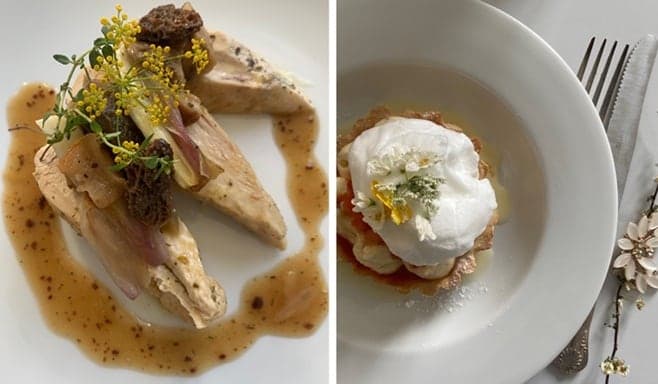
In the Dordogne, food is more than sustenance — it is a way of life rooted in the land, the seasons, and generations of craft. From truffle markets and duck farms to candlelit restaurant terraces in Sarlat, this is one of France's great culinary regions. Here is how to eat it properly.
In the Dordogne, food is more than sustenance. It is a way of life, a story passed from generation to generation, and a source of quiet pride rooted deeply in the land. From truffle-laced morning markets to slow-roasted duck on a terrace overlooking the river, every culinary experience here reflects a culture that values patience, craft, and an unsentimental respect for seasonality. If you care about eating well, this region will not disappoint you.
Foie Gras and Duck Confit: The Soul of Périgord Cuisine
Few foods are more deeply tied to the Dordogne's identity than foie gras. Crafted with meticulous care on small family farms, this delicacy appears in countless variations across the region's menus — cold in a terrine with a glass of Monbazillac, gently pan-seared and served alongside fresh fig compote, or blended into a silky mousse with a scraping of local butter on warm country bread. It is not merely a dish; it is a tradition that pre-dates the Revolution.
Duck confit is the other great staple of Périgord cooking. The duck leg is cooked slowly — sometimes for several hours — submerged in its own rendered fat until the meat falls from the bone and the skin crisps to a deep, burnished gold. Order it alongside pommes sarladaises: potatoes layered with duck fat, garlic, and flat-leaf parsley, baked until golden at the edges. This is the dish that defines the region. You will find it on almost every menu in Sarlat, and you will understand immediately why.
In Sarlat-la-Canéda itself, the Saturday market — one of the finest in southwest France — overflows with vacuum-packed confit, whole foie gras lobes, terrines, and rillettes. Arrive before 10am for the best selection and the best conversation. The town sits roughly 30 minutes south of Les Eyzies and at the heart of the most productive duck-farming country in France. A magret de canard — the breast of a duck fattened for foie gras, leaner and more flavourful than a standard duck breast — is worth ordering wherever you see it, particularly when it comes with a sauce built around Pécharmant or a handful of wild cèpes.
Truffles and Wild Mushrooms: Aromatic Treasures
In the wooded limestone landscapes of the Dordogne, a treasure lies just beneath the surface. The black truffle — la truffe noire du Périgord, Tuber melanosporum — is one of the most prized and mysterious ingredients in French cuisine. Its deep, earthy, faintly chocolatey aroma transforms even the simplest preparation: a soft-boiled egg, a risotto, a thin slice of bread with salted butter. At a good restaurant, ask for the brouilllade aux truffes — scrambled eggs finished with shaved truffle and a little crème fraîche — and you will have a clear sense of what all the fuss is about.
In the village of Sorges, 20 minutes north of Périgueux, the Écomusée de la Truffe traces the full story of the region's obsession with this subterranean fungus. The nearby Truffle and Foie Gras Fair in Sarlat each January draws serious buyers and curious visitors alike — if you are planning a winter trip, it is unmissable. The village of Saint-Alvère hosts a dedicated truffle market every Monday morning from December through February, one of the most authentic in France, where the transactions are conducted with a seriousness that borders on theatrical.
Through autumn, the forests also yield cèpes (porcini), girolles, and chanterelles in abundance. Local restaurants list them simply: sautéed in duck fat with a little garlic, or folded into omelettes with a scattering of flat parsley. Order them whenever you see them on the menu — they will have been picked that morning, quite possibly from the woods behind the restaurant. When you are staying in a private holiday home in the countryside, you may well find a local who will show you where to look yourself.
The Villa Kitchen and the Dordogne Food Culture
Here is something a hotel cannot give you: the full, unhurried experience of cooking in this region with ingredients you have chosen yourself. When you are based in a stone farmhouse in the Périgord Noir — with a proper kitchen, a shaded terrace, and a market town within 20 minutes — the Dordogne's food culture opens up in ways that a restaurant menu simply cannot replicate. The hotel restaurant is a pleasure, certainly. But it is a curated one, with fixed times, fixed choices, and a fixed distance from the source. Self-catering here is something altogether different.
Consider a Saturday morning in Sarlat. You arrive early at the market, still cool under the plane trees, and work your way through the stalls. You buy a fresh duck breast from a farmer who raised the birds himself, a wedge of aged cabécou wrapped in a chestnut leaf, a bunch of flat parsley, and a small jar of walnut oil from the mill at Moulin de la Tour near Sainte-Nathalène — about 12 minutes east of Sarlat. On the way home, you stop at the cave coopérative de Monbazillac — roughly 45 minutes west on the road toward Bergerac — and pick up two bottles of their golden dessert wine for around €8 each. That evening, the advantage of a full kitchen is that you cook the duck breast yourself: rested in the pan, sliced pink, with a reduction of the cooking juices and a handful of sautéed girolles on the side. A glass of Monbazillac alongside. The children asleep. The cicadas starting up.
Or consider something simpler still: a Tuesday afternoon at a farm shop near Les Eyzies, where you buy a tin of confit de canard and a small jar of rillettes d'oie. Back at the villa, you crisp the confit in the oven while the potatoes roast slowly in a little of the duck fat from the tin. You open a bottle of Pécharmant you found at a roadside caviste on Monday. A private pool means the afternoon was already a success before the cooking began. The advantage of self-catering in this region is not simply convenience; it is immersion in a food culture that has been built, over centuries, around exactly this kind of domestic pleasure.
Many of our guests find that this rhythm — market in the morning, a farm visit on the way back, slow cooking in the evening — becomes the shape of the whole holiday. It is a different kind of luxury from the hotel restaurant: quieter, more personal, and in its way more memorable.
Producers and Farm Shops Worth Visiting
The Dordogne rewards those who venture beyond the restaurant terrace. A network of small producers sell direct from the farm, and the quality is invariably higher — and the prices often lower — than anything you will find in a supermarket or a tourist-facing épicerie in the old town.
- Ferme de Biorne, near Sarlat — a well-regarded duck and foie gras farm selling direct to visitors. Their terrine de foie gras entier is among the best in the area, and they also sell confit, rillettes, and gésiers confits. Call ahead to confirm opening hours, particularly outside of summer and the main winter production season.
- La Ferme de la Rivière, near Bergerac — a duck and foie gras producer with a well-stocked farm shop, approximately 10 minutes from the centre of Bergerac. Well worth combining with a visit to the Monbazillac vineyards immediately to the south; the château at Monbazillac is only a further 5 minutes and offers tasting and direct sales.
- Moulin de la Tour, Sainte-Nathalène — one of the last working walnut oil mills in the region, using stone-grinding techniques essentially unchanged for centuries. You can watch the pressing in season (autumn and early winter) and buy cold-pressed walnut and hazelnut oils directly. Located about 12 minutes east of Sarlat, it is an easy and rewarding detour on the road toward Souillac.
- Goat cheese farms and fromageries — small producers throughout the Périgord sell cabécou and fresh tommes at farm gates, market stalls, and occasional fromageries artisanales. Ask locally for whoever is closest to your villa; the Saturday market in Sarlat will always have at least two or three producers, and they will tell you where their farm is if you ask.
- Local honey producers — acacia and chestnut honey from the Dordogne are exceptional. Look for signs reading miel artisanal along rural roads, or ask at any market stall. Most producers will point you toward their preferred local beekeeper, and a jar of dark chestnut honey with a wedge of aged cabécou and some fresh walnuts is one of the great simple pleasures of a Périgord afternoon.
Game, Poultry, and Forest Cuisine
In the cooler months, Dordogne menus shift toward the hearty and the warming. The region's hunting traditions run deep, and autumn and winter tables reflect them honestly. Look for civet de chevreuil — venison slow-braised in red wine with juniper and bay until it reaches a deep, almost mahogany richness — and sanglier en daube, wild boar stewed for hours with root vegetables, lardons, and a good Pécharmant that costs the kitchen nothing to sacrifice and gives the sauce everything. Roast pheasant served with a sauce of forest mushrooms, cream, and a scattering of lardons is another autumn staple worth seeking out when the season is right.
These are dishes that require time and patience — and they taste exactly like that. Staying in a private villa rather than a hotel gives you the option of doing this yourself. Buy a haunch of venison from a butcher in Sarlat or Périgueux (the town's covered market, the Clautre, is excellent for game in season), and spend an afternoon in a kitchen that smells of red wine and thyme. It is one of the great pleasures of a Dordogne winter visit, and something no hotel breakfast buffet can prepare you for.
Artisan Cheeses with Character
The Dordogne is not a grand cheese region in the way that Normandy or the Auvergne is, but what it produces, it produces well. Cabécou is the local goat's cheese: small, round, and sold at various stages of ripeness from fresh and mild to aged and assertive. At its best, wrapped in a chestnut leaf and left to mature for a few days, it develops a gentle nuttiness that pairs beautifully with local honey and a glass of Bergerac rosé. Grilled briefly over an open flame or in a hot pan, it softens to something close to molten and becomes an entirely different pleasure.
Creamy tommes made from cow's milk are mild and earthy, appearing on cheese plates across the region alongside walnut bread and fig preserve. Look also for occasional small-production ewes' milk cheeses in the markets — not always available, but worth seeking out when they are. The correct accompaniment throughout is walnuts: the Périgord is one of France's premier walnut-producing regions, and a bowl of fresh walnuts with a wedge of aged cabécou, a drizzle of Moulin de la Tour walnut oil, and a fig preserve is as good a way to end a meal as any.
Recommended Restaurants in and Around Sarlat
Sarlat is the natural base for eating well in the Périgord Noir. The old town is compact enough to walk entirely, and its restaurants range from simple brasseries serving honest confit and omelettes to more ambitious tables offering the full repertoire of regional cuisine at prices that seem almost charitable by comparison with Paris.
- Le Grand Bleu, Sarlat — one of the region's most respected kitchens, with a Michelin star and a focus on elevated Périgord cooking. Expect duck prepared in multiple ways, truffle treatments that justify the price, and a wine list that takes Bergerac and Pécharmant seriously rather than treating them as afterthoughts. The risotto de cèpes à la truffe noire, when in season, is a dish to remember. Set lunch menus from around €45; dinner considerably more.
- Le Présidial, Sarlat — set in a beautifully restored 17th-century building in the heart of the old town, with a lovely enclosed garden for summer evenings. The foie gras terrine, served cold with a Monbazillac reduction and toasted brioche, is textbook; the duck confit is correctly done and the walnut tart to finish is better than it has any right to be. Menus from around €35 at dinner.
- La Madeleine, Sarlat — a reliable, unfussy classic for regional cooking without pretension. The magret de canard with cèpes and pommes sarladaises is consistently well executed, and the salade périgourdine — duck gésiers, lardons, walnuts, and a soft-boiled egg on bitter leaves — makes an excellent lunch starter or a light main in itself. Situated close to the main square and open throughout the season.
- Auberge de la Borie, near Les Eyzies — a countryside auberge about 25 minutes northwest of Sarlat, popular with locals and largely ignored by the tourist trail. The fixed Sunday lunch menu — soup, charcuterie, a roast, cheese, and a tart or crème brûlée — is about as close to home cooking as a restaurant gets, and at around €28 for the full spread it represents extraordinary value. Book ahead on Sundays.
Seasonal Markets and Culinary Events
The market calendar of the Dordogne is one of its great pleasures, and planning a family holiday in the Dordogne or a luxury holiday in the Périgord around at least one major market morning is strongly recommended. Sarlat holds its market on Wednesday and Saturday mornings — Saturday is the main event, filling the streets of the medieval quarter with producers from across the Périgord Noir from around 8am until 1pm. Périgueux has a daily covered market at the Clautre, among the best in the region for charcuterie, cheese, and seasonal vegetables. Issigeac — a beautifully preserved bastide town about 20 minutes south of Bergerac — hosts a Sunday market that draws producers from across the southern Dordogne and is considerably less crowded than Sarlat in high summer.
For events worth planning a trip around: the Truffle and Foie Gras Fair in Sarlat takes place each January and is one of the most atmospheric food events in the southwest; the Bergerac Wine Festival runs each August with tastings throughout the old town; and the Fête du Vin de Monbazillac at the château is held each summer, typically in July, combining wine tasting with music and a picnic atmosphere on the hillside vineyard overlooking the Dordogne valley.
Frequently Asked Questions
What is the most iconic dish to try in the Dordogne?
Duck confit with pommes sarladaises is the defining dish of the region — slow-cooked duck leg served alongside potatoes cooked in duck fat with garlic and flat parsley. It appears on almost every menu in Sarlat and the surrounding villages, and at its best, whether in a good local restaurant or cooked in your own villa kitchen using farm-bought ingredients, it is genuinely outstanding. The magret de canard — the breast of a foie gras duck, seared and served pink — runs it close, particularly with a sauce of cèpes in autumn.
When is the best time to visit the Dordogne for food and markets?
Every season has its own culinary character. Summer brings stone fruits, tomatoes, courgette flowers, and the weekly night markets (marchés nocturnes) that many villages run through July and August. Autumn is the finest season for wild mushrooms, fresh walnuts, and the early truffle harvest. Winter — particularly January — is truffle season proper, and the markets and fairs of this period are unlike anything else in France. Spring offers asparagus, fresh goat's cheeses, and the reopening of many farm shops after the winter break. There is no wrong month to visit for food.
Can I buy foie gras and duck products to take home?
Yes, and this is one of the great pleasures of visiting the region. Vacuum-packed foie gras terrine, duck confit in tins, rillettes d'oie, and walnut oil all travel well and make meaningful gifts. These are entirely legal to transport within the EU. UK visitors should check current import rules for animal products post-Brexit; tinned and fully cooked products are generally permitted, but fresh or chilled items may not be. When in doubt, buy the tinned confit rather than the fresh duck breast for the journey home.
Where is the best truffle market in the Dordogne?
Saint-Alvère holds one of the most authentic black truffle markets in France every Monday morning from December through February — small, serious, and largely attended by professional buyers and local restaurateurs, which is recommendation enough. Sorges, 20 minutes north of Périgueux, has the Écomusée de la Truffe and a genuine local market. Sarlat's January Truffle and Foie Gras Fair is larger and more visitor-oriented but equally atmospheric, and the quality of produce on sale is high. For those staying in a villa with pool in the Dordogne in winter, a morning at one of these markets followed by an afternoon cooking with truffles is a very good day indeed.
Is self-catering a good option for food lovers visiting the Dordogne?
It is arguably the best option. When you are based in a holiday rental in the Dordogne with a well-equipped kitchen, the full rhythm of the region's food culture — market shopping, farm visits, slow cooking in the evening — becomes part of the holiday itself rather than an optional extra. Many of our guests find this more deeply satisfying than eating every meal in a restaurant. The advantage of a full kitchen is that you can shop at the Saturday market in Sarlat, visit a duck farm direct, buy a bottle of Monbazillac from the cave coopérative, and cook something genuinely excellent that evening without it feeling like an effort. It feels, in fact, like exactly what you came here to do.
What wine should I drink with Périgord cuisine?
The local answer is Bergerac red — made principally from Merlot and Cabernet Franc, it pairs beautifully with duck, game, and mushroom dishes and is frequently better value than its reputation suggests. Pécharmant, the appellation's most serious red, has more structure, ages well, and is the correct wine for a slow-braised sanglier or a venison civet. For foie gras, the match is Monbazillac: a golden, honeyed dessert wine from the hillside south of Bergerac, produced since the 16th century and available from the cave coopérative for as little as €8–12 a bottle. It is one of France's great food-and-wine combinations and one of its most affordable.
Are there good restaurants near Les Eyzies and the Vézère Valley?
Yes — the Vézère Valley, famous for its prehistoric cave art, also has a solid restaurant scene for a relatively rural area. The Auberge de la Borie near Les Eyzies is a well-regarded local option with excellent Sunday lunch value. The town of Le Bugue, about 10 minutes west of Les Eyzies, has a Tuesday market and several reliable lunch options. Montignac, near Lascaux, has a handful of good brasseries and one or two more ambitious tables. For the widest choice and the best special-occasion restaurants, Sarlat is 30 minutes away and remains the culinary centre of the Périgord Noir.
Can I visit foie gras farms as a tourist?
Many farms in the Dordogne welcome visitors, particularly during the main production season in autumn and winter. Ferme de Biorne near Sarlat and La Ferme de la Rivière near Bergerac both sell direct and are accustomed to receiving visitors alongside their regular customers. It is always advisable to call ahead — especially in the shoulder season of spring and early autumn — to confirm they are open and to arrange a time. Farm shops frequently keep irregular hours outside July and August, and turning up unannounced at a working farm during harvest is not always appreciated.
The Dordogne's food culture is, at its core, about slowing down and paying attention — to what is in season, where it came from, and how it should be cooked. That sensibility fits naturally with the rhythm of a private villa holiday: no fixed dining times, no restaurant bill at the end of every evening, and the freedom to spend a morning at a market and an afternoon beside a private pool before cooking something quietly excellent as the light fades over the valley. If that sounds like the kind of holiday you are looking for, browse the DordogneCollection portfolio of luxury holiday villas in the Dordogne — each property chosen for its character, its position in the landscape, and the quality of its kitchen.